

Let’s cut to the chase right out the blocks.
Robber Baron: American industrial or financial magnates of the late 1800s who became wealthy by unethical means, such as questionable stock-market operations and exploitation of labor.
Think Dick Dastardly.
Our industry’s governing bodies have always been a collection of monopolies, often run by a cadre of unapologetic robber barons. All of a same ilk. Difficult to respect, easy to ridicule. Impossible to remove.
Oh Robin, we miss you buddy.
The likes of UEFA, FIFA, IOC, PGA, ICC, rugby unions, have for decades all been allowed to swan around with no real accountability or profit imperative, leveraging unchallengeable market dominance with excessive autocratic power, making decisions in the most opaque of corrupt rooms, looking down from their royal boxes and private jets, as their subjects eat cake.
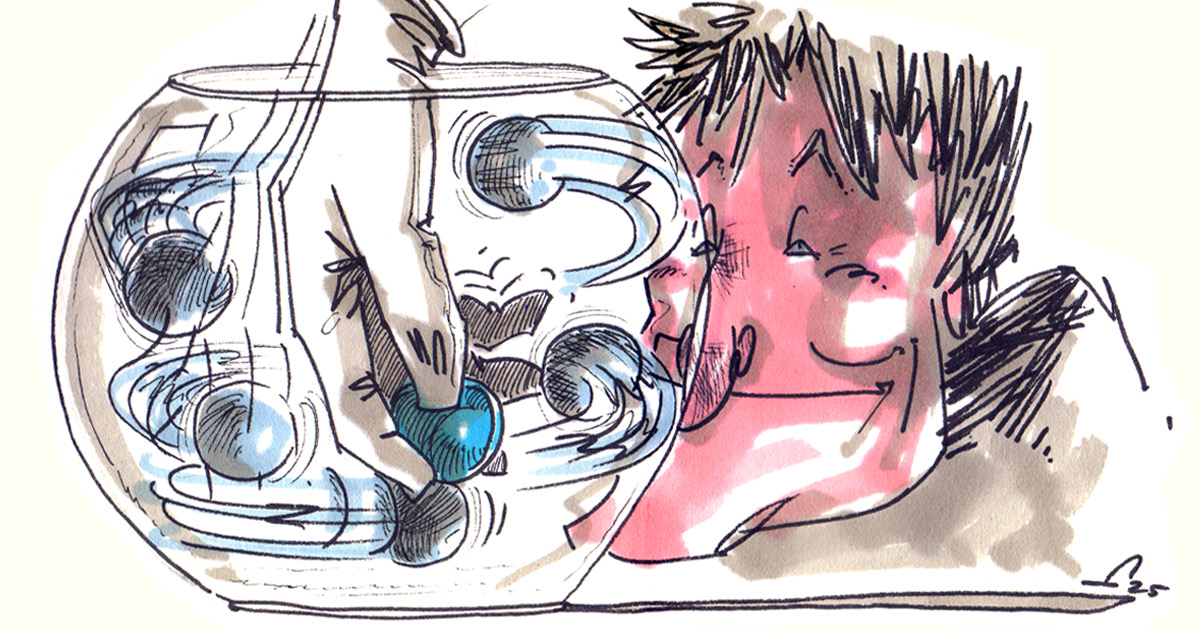
Mr Bladder (sic), with his blue balls, is a perfect example. Someone comics and artists could always smell a mile away.
So could the FBI.
These cartels have been tolerated in our industry in the name of what is called the “specificity of sport”. The plea that our games are so special as to deserve unique exemption from the very basic common law of the land.
To date it has almost always worked.
In 2001 I myself sat on the UEFA Professional Football Committee that sought to protect the entire football transfer-fee system from the simple rules of EU employment law. In the end, what was hatched as Bosman 2 was a horrendous fudge to kick the can into the long grass under the protection of the “specificity of sport”. An illuminating personal experience for sure.
Today’s Sunday Column considers if the winds of disruption for such monopolies are now strengthening, and what it could mean for our industry in 2026.
It’s really an exercise in game theory. The variables on the board are inter-connected and complex.
The rise of Citizen Smith and Hanoi Jane.
Power to the people!
I recently spent several dreich November days in the UK, undoubtedly made gloomier by dumbed-down media diatribes about tax-and-spend budgets, haves & have-nots, winners & losers, insolvent farmers, savers & spenders. In short, endless verbal drizzle about what is basically the increasing polarisation of our societies. Some commentary thankfully also drifted into sharper debates about wealth creation, market forces and even the merits of capitalism itself.
Like it or not, there is for sure a growing resentment towards older generations who have “messed everything up and stolen all the money”. A whole socialist/communist/anarchist movement is on the rise, and they are angry and vindictive.
Yes, the music is definitely changing and needs to be essential context today for anyone writing seriously on business and finance, including sport.
This is a favourite clip of the Sunday Column because it is just so damn accurate, and John Tuld is very correct. Being a great leader is in having the ability to hear the music of next month, next quarter, next year, in advance of the pack. To put together your own playlist before the world wakes up.
Specifically now, can we yet hear how the rise of feral socialist thinking could affect the monopolies (of sport)?
Spoiler alert: They usually don’t like them, unless they are nationalised. Oops!
The children of Reagan and Thatcher.
On full reflection, it is perhaps somewhat lost on today’s youngsters just how much my generation, coming of age in 1980, was so deeply impacted by the deregulation of markets at the end of the 1970s. Life lessons were burnt into our core, which we have inevitably carried into our business careers and politics.
It just doesn’t scale!
Chapeau!
It’s perhaps good to briefly revisit those old days, to better understand how things could play out in the rest of this decade. The past is always prologue.
The 1970s were economically and socially a horrid decade. Cities like New York were a squalid pit of grime and bankruptcy. Labour disputes, power cuts, unemployment, businesses failing, horrendous inflation, and terrorism. The Italians named the entire decade Gli Anni di Piombo (The Years of Lead). We, as kids back then, all got a taste of that lead. Homework by candlelight, frustrated fathers endlessly on strike, British and American businesses evermore uncompetitive. Government finances all fucked compromised.
In 1976, Britain actually went bust, and today’s zealots for tax-and-spend would do very well to familiarise themselves with that episode. The phrase used at the time to articulate the humiliation was “cap in hand”.
Make no mistake, the 1970s was a decade of committed socialist thinking, which objectively just didn’t work.

Posters like this made the point, and the new music, as always, was the first to tell us that change was imminent.
I am an Antichrist.
I am an anarchist.
Don’t know what I want but I know how to get it.
I wanna destroy the passer-by.
A new breed of politician did arrive very soon after those John Lydon lyrics. Leaders who believed in getting governments as far away as possible from economies and individuals creating wealth.

Boomers and Gen X back then all got that memo, put their shoulder to wheel to compete hard, and kept true socialist ideas away for a good 30 years.
No longer it seems.
Watching this week’s budget speeches was simply traumatic for many of us. The new leader of the UK’s Green Party Zach Polanski is a rising darling of British society, similar to Zohran Mamdani in New York. Zach however is an economic illiterate, a populist imbecile. Have a listen to his grasp of economics and macro-finance if you think that is harsh.
Rory Stewart is correct here (not a phrase I ever expected to write), but look how Polanski is defended. Do not underestimate this. It’s coming.
And sadly we all know how the movie ends. There will be a lot of pain.
Hands that are invisible.
Economics 101 tells us that markets forces, if left alone, naturally find the prices of everything via supply and demand, to then direct resources/capital to where they will make the best return. When goods are rare and expensive, entrepreneurs will create new supply to take a share of those juicy profits for themselves. This lowers prices for the consumer. Equally when there is excess capacity and oversupply, prices become too low to make profits, and companies will either give up or go bust, bringing the market back into equilibrium.
In his opus, Wealth of Nations, the Scottish Enlightenment thinker Adam Smith articulated all this with the metaphor of the invisible hand, and it continues to be the central principle of free-market capitalism, known as “laissez-faire” (just let the market get on with it).
Here endeth the lesson for the Sabbath but: “What has this got to do with working in sport?”.
Well, we can see the exact same market dynamics everywhere in our sector these days. Wrecking havoc. The product/market fit in our entire industry is being forcibly disrupted by Smith’s invisible hand. Many reading this Column will be affected dramatically.
You can never buck the market.
The intellectual difference between small-government free marketeers and dirigeste socialism is essential philosophy for understanding what is going to happen, also in sport.
We have spent recent Sundays discussing in depth the rise of Paramount, who are now (positively) affecting the bid for sports rights. This broadcaster is cash-flush from an AI market bubble boom, that has massively boosted the coffers and share price of Oracle and the Ellison family.
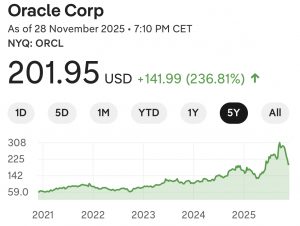
Impressive 5-year gains, but note the pullback in recent months. That’s Mr Market for you.
The smart kids are starting to trade the AI bear case we laid fully out in Landman, and know it will ultimately impact Oracle. In fact, look at the cost of now insuring Oracle debt 😱.
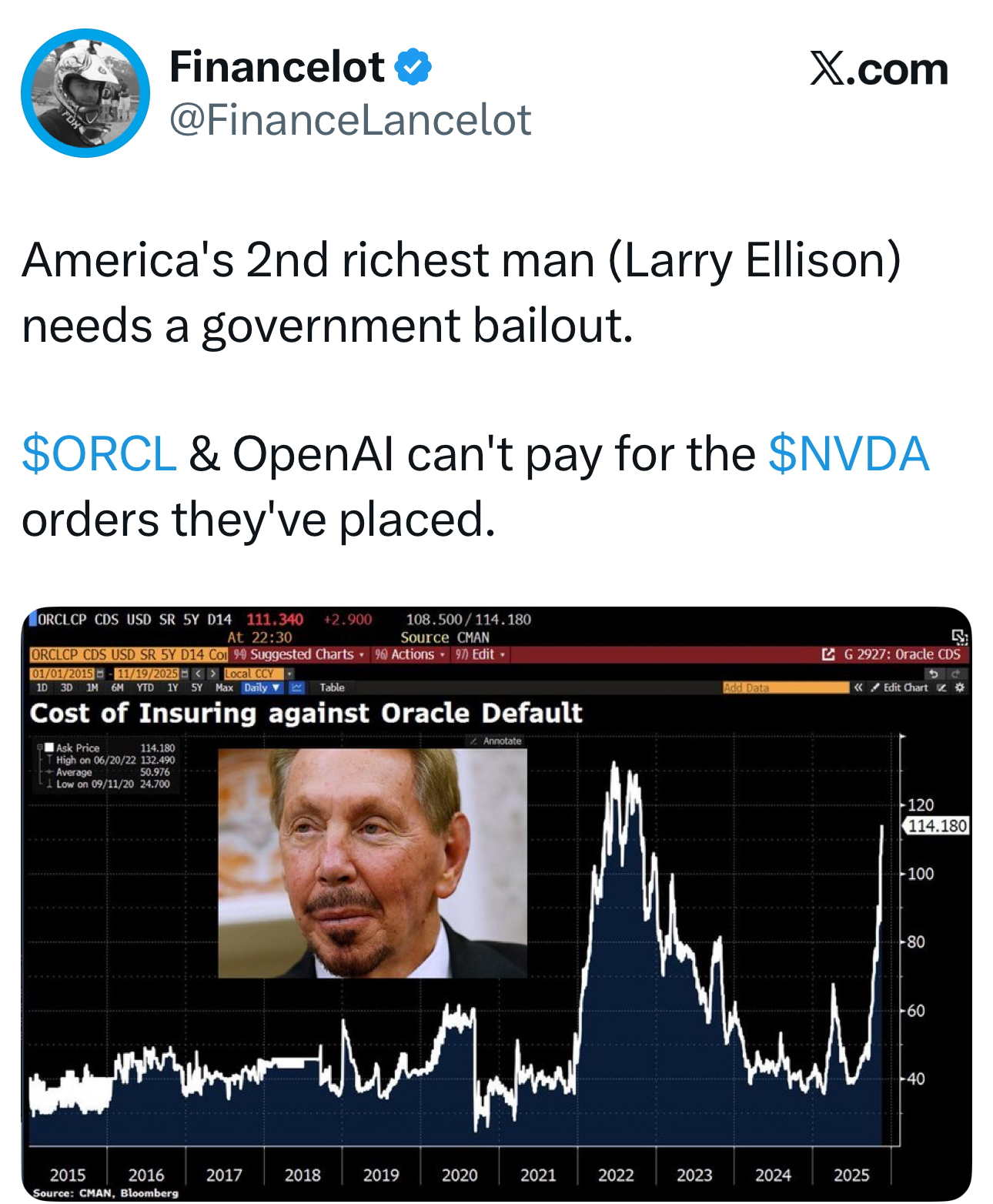
The truth always lies in the yield of the debt.
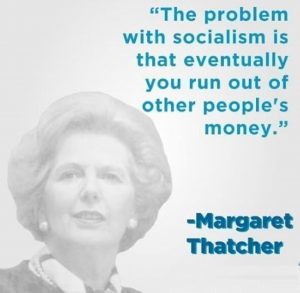
If the AI bubble bursts, Paramount will not be unaffected, and sport will have lost its juicy bid from the Ellison family. These right here are the market forces in action, in real time. A grocer’s daughter from Grantham, England, said it best:
You can’t buck the market.
– Margaret Thatcher
Back then she was specifically chastising her own Chancellor Nigel Lawson for trying to artificially peg Sterling to the Deutsche Mark in 1988. And events again proved her right.
The road to hell is paved with good intentions.
– Samuel Johnson
Bayonetting the Wounded.
So much of our industry is now being re-engineered under the pressure of the free market and capitalism.
And those who lived through Thatcherism will know what “re-engineered” really means.
*
Broadcasters, media agencies, marketing conglomerates are all being merged with impunity. Flabby revenue models are being simplified, people are being laid-off, value-chains being rationalised with tech and AI (Oracle giveth and Oracle taketh away).
**
Sports TV channels are mercilessly culling the superfluous, bayonetting the wounded, and we can see this best at DAZN; first France, now Belgium and Australia. Sport content is being disrespectfully bounced around, like a common cat video, in reaction to a media industry turning itself upside down, trying to find a way to make money.

***
Broadcasters today buy sports rights that capture a demographic and they are no longer really even that bothered about owning the full story of a competition. It’s now just an audience and cost-of-customer-acquisition play. If Paramount or Amazon attract the subscribers they need from the UEFA Champions League (UCL), do they even require to buy national domestic leagues?
This is the dramatic new conundrum for the tendering of rights: getting the timing right around the UCL auction. A lot of national leagues may be caught with their pants down as global sports properties like the UCL are in reality “crowding out” the bread-and-butter domestic weekly fare. And it will get worse.
****
Watch how national soccer leagues in Europe start to realise how the sporting integrity of their competition is being trashed by their top clubs now earning unreachable megabucks in the UCL and Club World Cup. This penny hasn’t fully dropped yet but it will soon. Leagues all risk to end up like Scotland, with uncompetitive boring competitions. No wonder the big English clubs rejected “anchoring” as a wage cap. They can perhaps see where this invisible hand is leading European football, and don’t want to be held back when it all plays out.
*****
There is now an entirely different appeal for the sport, and even the old slow mainstream media is now noticing. Fandom is changing dramatically, (into the inevitable Hollywood v Arthouse trope), and what new customers want is dramatically different.
Not all of this is bad news.
We can already observe in many cases the live stadium experience becoming more important at clubs, when fans can afford the tickets! There is a welcome renewed thirst to double-down on the thrill of blood-and-snotters local football. Either way, it is very clear that the market of Association Football is segmenting in front of our eyes.
******
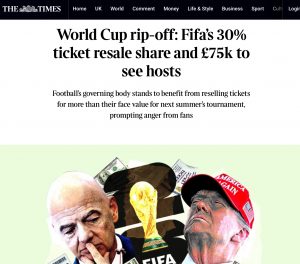
At the same time we now are served so many investment decks with the new model of (challenger) sports leagues, around pzazz and “iconic locations”, in a travelling festival of sport. The Tent-Pole. The Big-Event. Often with very premium ticketing prices, exclusive hospitality, celebrity pit walks, all marginalising sport’s traditional fanbase. This is true from FIFA to F1 and everything in between.
*******
AI, in macro and micro.
The market forces of artificial intelligence are driving stock market valuations, changing the dynamics of sports rights bidding, and redefining the value-chain of content creation.
Mr Market smirks at all this, and isn’t at all surprised. Many of us also believed (and wrote) that all this was inevitable, and were exactly the market forces that could never be “bucked”.
Others disagreed, and celebrated the demise of the Super League as a victory for the tradition and authenticity of the status quo. But they didn’t see the invisible hand. Couldn’t hear the music. Didn’t realise that a closed Super League was always coming, and the entire battle was only one of ultimate ownership and control.
Let’s be very honest and clear. The Champions League and Club World Cup is a Super League by dishonest stealth, whilst maintaining essential control for UEFA and FIFA. As opposed to JP Morgan.
But greed is not always good.
Markets have no heart or soul, and today’s Column isn’t an essay to blindly cheerlead Wall Street, Maggie and Ronnie, or even Adam Smith himself.
All dogma is flawed, and free-market thinking is no different. Only a fool won’t or can’t see the dangers of capitalism, especially the abhorrent “crony” version we have today.
The animal spirits of human nature will always, without some kind of control, lead to excess. Market forces tend to inevitable monopoly abuses, and inequalities. Tides do not rise to lift all boats, and wealth does not all eventually trickle down, as Reagan and Thatcher promised.
The distribution of wealth has never ever been so polarised as it is now.

I like to call this chart the Robber Barron Index.
If the working classes of the West were the unknowing victims of market globalisation in the 1990s, it’s clear that in this millennium it is the turn of the “squeezed” middle classes to get royally screwed. They just haven’t been paying attention yet.
Because the world, economically and socially, has been returning feudal for a while now. The 2008 Great Financial Crisis to most seemed like governments performing well, making the very nasty banking crisis go away, with no apparent pain to the ordinary Joe.
Nope.
Our leaders, nominal left-leaning politicians like Obama and Gordon Brown, made the humble working taxpayer pay to bail-out the rabid and reckless risk-taking of callous capitalist investment bankers.
Oh, the irony!
Capitalist in good times, socialist in bad.
– Robert Reich
Don’t ever forget that politicians run for office in poetry; they govern in prose. And absolutist certainty in anything is always the hobgoblin of small minds.
In reality 2008 was the greatest grand larceny imposed on a general public that the world has ever seen, and has also now completely lost “capitalism” all of its credibility and moral high ground as the superior system.
Robin again told it best, of course he did!
So, yes, communist thinking finds fertile fields in 2025, but that’s a direct result of us all having saved the ass of AIG, Goldman, Morgan Stanley. We have no one to blame for Polanski and Mamtani but ourselves.
What do we hear playing for tomorrow?
How hard are the new young angry generations going to come after big business and the robber barons?
Monopolies, we remember, are the ultimate destination of naked free market forces, and they create the immense wealth and abuse of power that socialists despise. If and when they seize power, they will for sure will go after companies like Amazon, Google, Meta, Microsoft, Tesla, Palantir, OpenAI. And also Larry Ellison, the new white knight of sports media rights.
Why do you think all these people have now started cozing up to MAGA and Trump? The Orange Man may be everything bad we know he is, but he is objectively less scary to Dick Dastardly than the Commies.
We shall see all this in 2026 but, for our industry, it isn’t even the biggest threat. After all sport is a political vote-winner if you are seen to play nice.
The bigger risk to the cartels of our sector comes from elsewhere; the very structures of corporate antitrust law. The legislative branch. Monopoly competition organisers like UEFA are now being called out legally for what they really are.
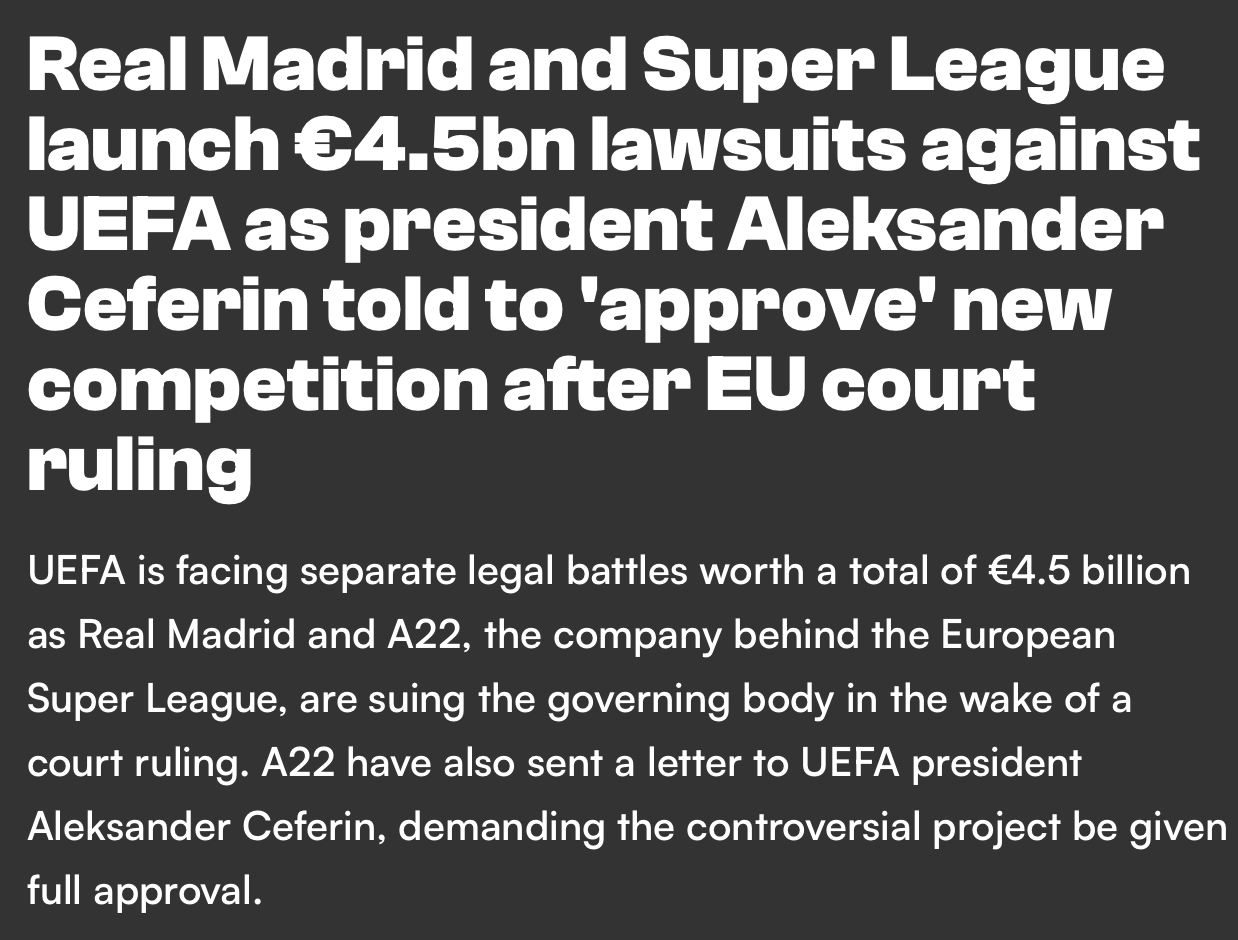
More and more now, sport’s special treatment is being attacked. The letter sent by A22 is devastating:
To date, three different European courts including the EU’s highest court have issued consistent rulings that leave no room for doubt: UEFA’s abuse of its dominant monopoly position cannot stand, and its exclusionary practices must cease. Despite this clarity, UEFA continues to maintain statutes which are contrary to EU law. Incredibly, UEFA implemented its most recent non-compliant rules in June 2024, six months after the CJEU ruling in December 2023. As a result, UEFA is now exposed to substantial damage claims from injured parties including clubs, players and A22.
The Diarra case itself is “Bosman 2 revisited” and still today threatens the entire transfer system in European football. It is a swan blacker than the dead of night, and It is not going away. None of this stuff is. Someone check how much the EPL is spending on legal fees these days.
UEFA and football aren’t the only perp. Golf and its Tours are run as a monopoly. Tennis also. Rugby and its Unions, acting in concert, are an obvious cartel. The NCAA for decades tried to bully athletes, until the Supreme Court stepped in.
I’d lawyer-up.
The case for the defence is weak.
Sport’s robber barons continue to throw their weight around with extreme prejudice, withholding golf world ranking points here, threatening exclusion from international rugby there, telling athletes they can’t be paid in college. Their hubris, especially for those who have ever had to deal with them directly, is staggering.
In LIV Forever, we described how exactly this nearly brought the PGA to its knees, because legally they were way over their skis.
“A peace was attempted a year ago, when LIV in reality had the PGA staggering on the ropes. The cartel and abusive monopoly behaviour of Jay Monahan had been so bad, with a damning audit trail, that the Saudis had taken them to court. They would have comfortably won that, demanded $3bn, and absolutely bankrupted the PGA. They dropped the case, as an olive branch to hope to get people back around a table to find a peace and a partnership. A future for the game.”
All of these leaders in sport’s monopolies, in their heads, still think that they are entitled to act well outside the limits of antitrust law. And that’s a mistake.
So it’s no surprise that we see A22 and Real Madrid “gently” reminding UEFA this week that things are going to be a bit different going forward. Just as the Saudis did to golf.
And perhaps R360 will one day for rugby. (The number of sports lawyers who have cold-called me, offering to challenge the eight Unions’ threat to players over international rugby, was telling. The shareholders of R360 will be watching the A22 and Real Madrid case with much interest, I sense.)
Be careful what you wish for.
If the industry of sport continues to want to attract capital by calling itself an asset class, then it is just incongruous and naive to think that it can continue to operate outside the legal antitrust framework of business monopolies. And corporate law in general.
If it insists on proudly calling itself an investment for financial return, then it shouldn’t run away to mummy when the normal rules of that big-boy world are applied to its structures and governance.
Sport has opened a lot of tabs on its browser in these years, trying to attract new money. Many of those, apparently forgotten, are still active, and potentially devastating to the industry.
…
So what music do I hear queued up?
A sporting monopoly like UEFA has myriad possible futures.
- It remains a permitted cartel, tightly controlled, if not owned, by the EU.
- It gets de facto broken up by market forces, just like the NCAA.
- It shakes Adam Smith’s invisible hand and declares openly that it is nothing more than a closed trade association for the very big clubs.
This may of course be well off the mark, but at least one makes an attempt to hear the notes and think lateral. And that’s always the point. Don’t be AI-generated. You let an LLM (large language model) do your work, you are putting yourself in a cage.
A small Birdcage.
This scene, this film, is simply delightful. Close to his finest work!
Nanu Nanu!

To order the Limited Edition of Roger Mitchell’s book “Sport’s Perfect Storm“, click here and fill the form.
Listen to our “Are you not entertained?” management podcast here.
To find out what we do in change management, have a look here.
For our C-suite management services, read here.
Here you can know more about our content development work.
Discover our Corporate Learning service here.
Get to know more our “Sport Summit Como” yearly sports management event here.
If you want to read our own story, go here.