

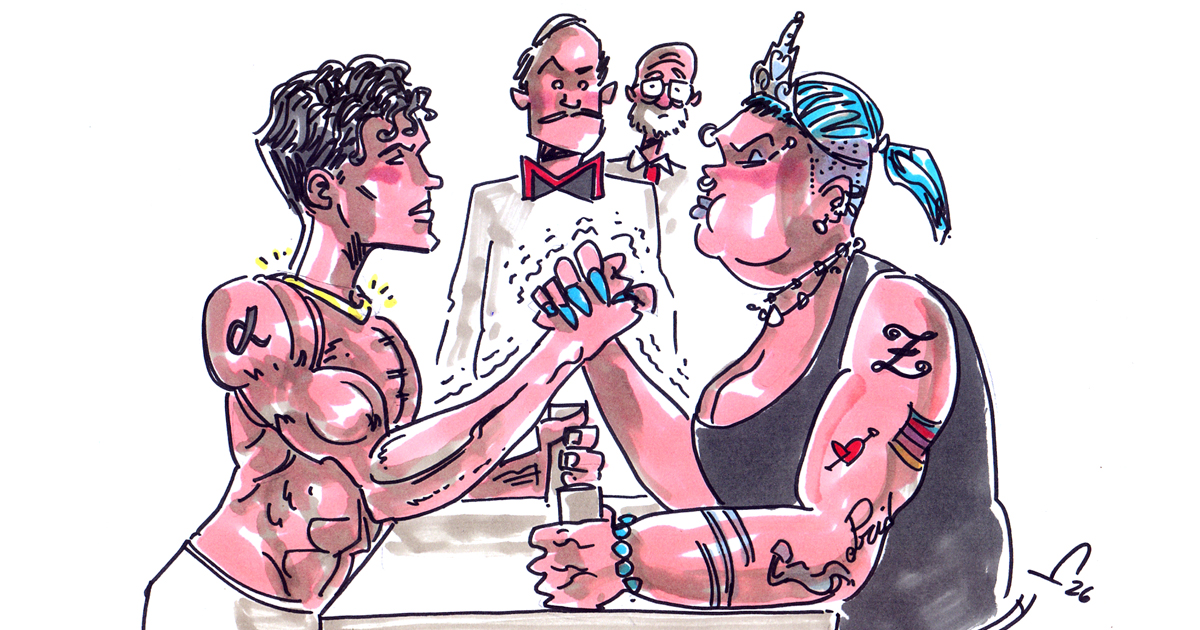
We signed off these Columns last year with this.
Maybe there is now even a certain coolness in quietly retiring from the battlefield, and watching it all play out. Especially as one senses that 2026 is going to be a humdinger of a year for “macro”. We will see you at some point, when we have something specific and unique to say.
Well, 2026 hasn’t let us down.
The geopolitical storm is now all around, even if one fears that the full fallout hasn’t yet been priced into markets. As Landman warned, the availability/price of oil affects absolutely everything, and we are now only in the first innings of what is to come.
Specifically in our industry of sport, the Perfect Storm plays out with vivid examples every day, from Chelsea FC to LIV to F1, and if we insist to call ourselves an “asset class”, the appropriate adjective for the sector needs to be high-VOL, high-Beta. And yet fresh capital (mainly debt) still rushes into sport every day, in ways most fans can not understand. PIK as an acronym now seems more prevalent than VAR!
All very predictable. So, why feel the need to write something today?
It was a conversation around the Easter lunch table, with early-20s kids and their friends.
[ What do you expect? They are the children of Millennials.]
Now if that “stray” isn’t getting your attention, provoking some curiosity, I’m not sure what will. It is today’s Sunday Column.
Complexity is always a virtue.
Everything in our world is now complicated and interconnected, where no answer of any real value is ever the obvious one. In 2026, Occam’s Razor is no longer the smart explanation. Today the real reason for major problems often resides very far from the crime scene, and the search for proper insight and truth is a long and winding road.
This is the original “naked” version of McCartney, not the wall-of-sound production of producer Phil Spector. And that’s the point. In the excruciating legal pleadings around the breakup of the Beatles, Paul took six specific reasons into the courtroom. One of them was artistic interference on specifically The Long and Winding Road. So the blame doesn’t lie necessarily with Yoko, or Alan Kline. The real reason was in the authenticity of an artist.
Straight roads are always boring and predictable. Best to meander.
Money, Demographics and Geopolitics.
This is the strap line for everything Albachiara has ever published; the inputs from which all things can be explained and predicted. The compass for the long and winding road.
Always follow the money, never forget the macro, and be sensitive to generational trends.
All three of course bleed into each other, but by far the easiest to understand per se is Demographics.
Demography is destiny.
Auguste Comte, French philosopher and father of sociology.
So simple and yet so profound. The reality that a population’s birth rates and migration trends fundamentally determine its social, economic, and political future. Seldom in life and business is something this important so easy to see; a genuine gift of a crystal ball. Projecting forward 10, 20, 30 years is an extrapolation no more difficult than GCSE arithmetic.
And yet so illuminating. For example this is the future of American society, and why the immigration debate is so nuanced. Will we recognise America in 2050?
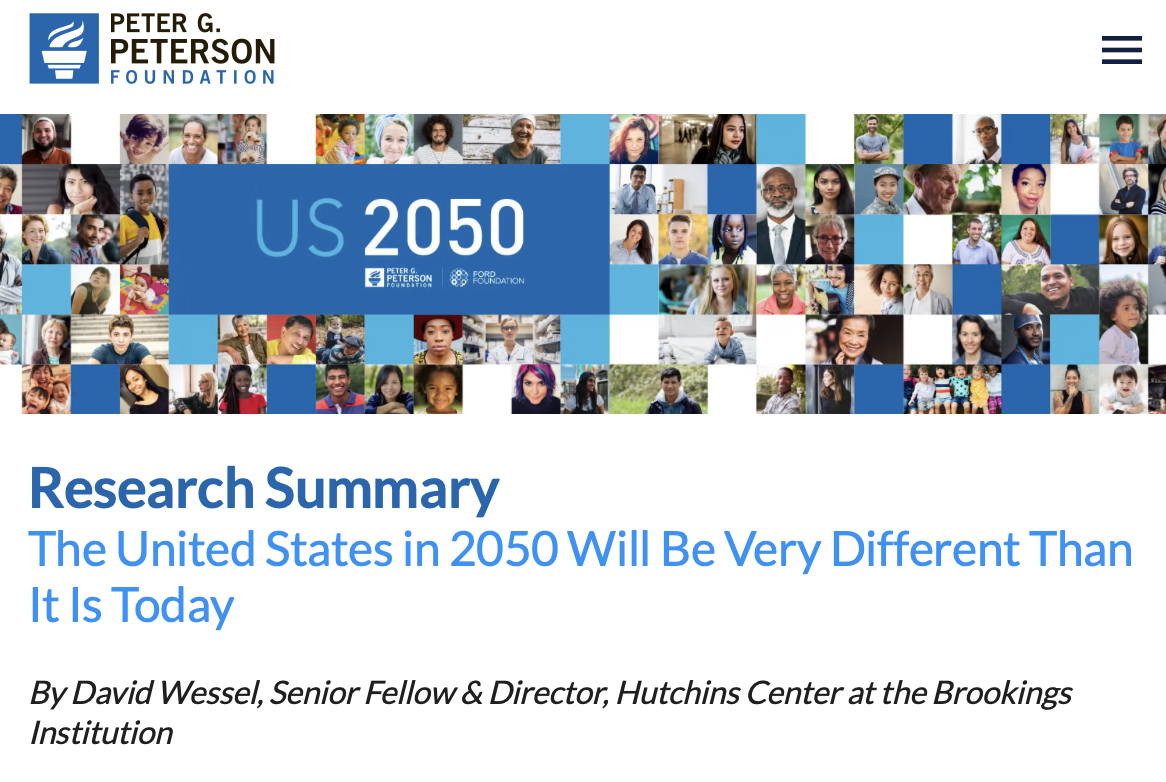
Demographic analysis is an essential part of any successful life and career, which great business people and elite investors never ignore when deploying capital. Only the curious thrive; only the paranoid survive. And both of those tribes are always looking for signals to move before everyone else.
There are only three ways to be better: Be First, Be Smarter, Cheat.
Being off your mark before the others is always the easiest.
The rate of demographic change is accelerating out of control.
[ What do you expect? They are the children of Millennials. ]
Sounds like one of those signposts to me!
They who?
In the 20th century, each new generation wasn’t that much different from the previous one. Gen X was pretty close to the Boomers in values and attitudes. They in turn heard direct stories of war and famine from The Silent Generation before them.
Sure, each new era has always rebelled against their parents for a while, but ultimately we all ended up pretty much the same.
If you are not communist in your 20s, you don’t have a heart; if you’re not capitalist in your 30s, you don’t have a head.
A quote attributed to many, from Churchill to Clemenceau, Disraeli to Hugo.
Because it is just so true, and the principle goes a long way back.
When I was a child, I spoke as a child, I understood as a child, I thought as a child; but when I became a man, I put away childish things.
Corinthians 13:11.
And now? Still hold?
Many will say that these old axioms started to go a bit off piste with the Millennials, coming of age at the classic fin de siècle, the dawn of the Internet, and the fall of the Twin Towers. All leaving them a wee bit dazed and confused. But the shift from them to Gen Z is genuinely huge, and many scribblers in these years have made a good living articulating that story. Crediting the Gen Z differences to social media, the iPhone, COVID. Digital natives isolated in a pandemic, building non-physical fake lives on a screen.
Those however, whilst also true, miss the main reason. The biggest change and challenge society has likely ever faced, and which will dominate the coming years more than most have yet realised.
A broken social contract.
This new millenium has been the first period in living memory where children cannot naturally expect to do better than their parents, and the implications of that are now starting to show everywhere. The democracies of the West, standing on the shoulders of giants like Hobbs, Locke and Rousseau, were all built on a tacit agreement (a social contract) between citizens and governments.
Gemini explains this well:
[ At its core, the social contract is a philosophical “handshake” between individuals and their government. It’s the idea that people living in a society implicitly agree to give up certain individual freedoms in exchange for the safety, order, and rights provided by a governing body. Think of it as the invisible software running in the background of modern civilization.
Without it, political theorists argue, we’d be stuck in a “state of nature” where life is every man for himself. ]
Whilst the Millennials have been rather slow to realise this flagrant breach of contract, happening right under their noses, Gen Z most certainly have already understood very well that they got royally screwed.
From a previous Column:
[ If we listen to our children, their memes will describe (too) well the legacy of who we have been, and what we have done, explaining uncomfortably how we have had it very easy. All we needed was a decent education to walk into a well-paying job, to buy a very affordable home, and just climb the career ladder on the universal rising tide of globalisation and the start of the Internet. They instead have a slightly (sic!) more difficult wall to climb, where only the globally-excellent human resources need apply, and, even then, after multiple unpaid internships, their remuneration will hardly cover travel, rent, and the Pret at lunch. Tragically, savings and home ownership are already seen by our children as delusional and unapproachable goals. Whisper it, these kids think we ran away with their futures, and in many ways they are not wrong. We paid ourselves too much, financed on the never-never, on debt, and have left it all on their backs, as we holiday in the Maldives.]
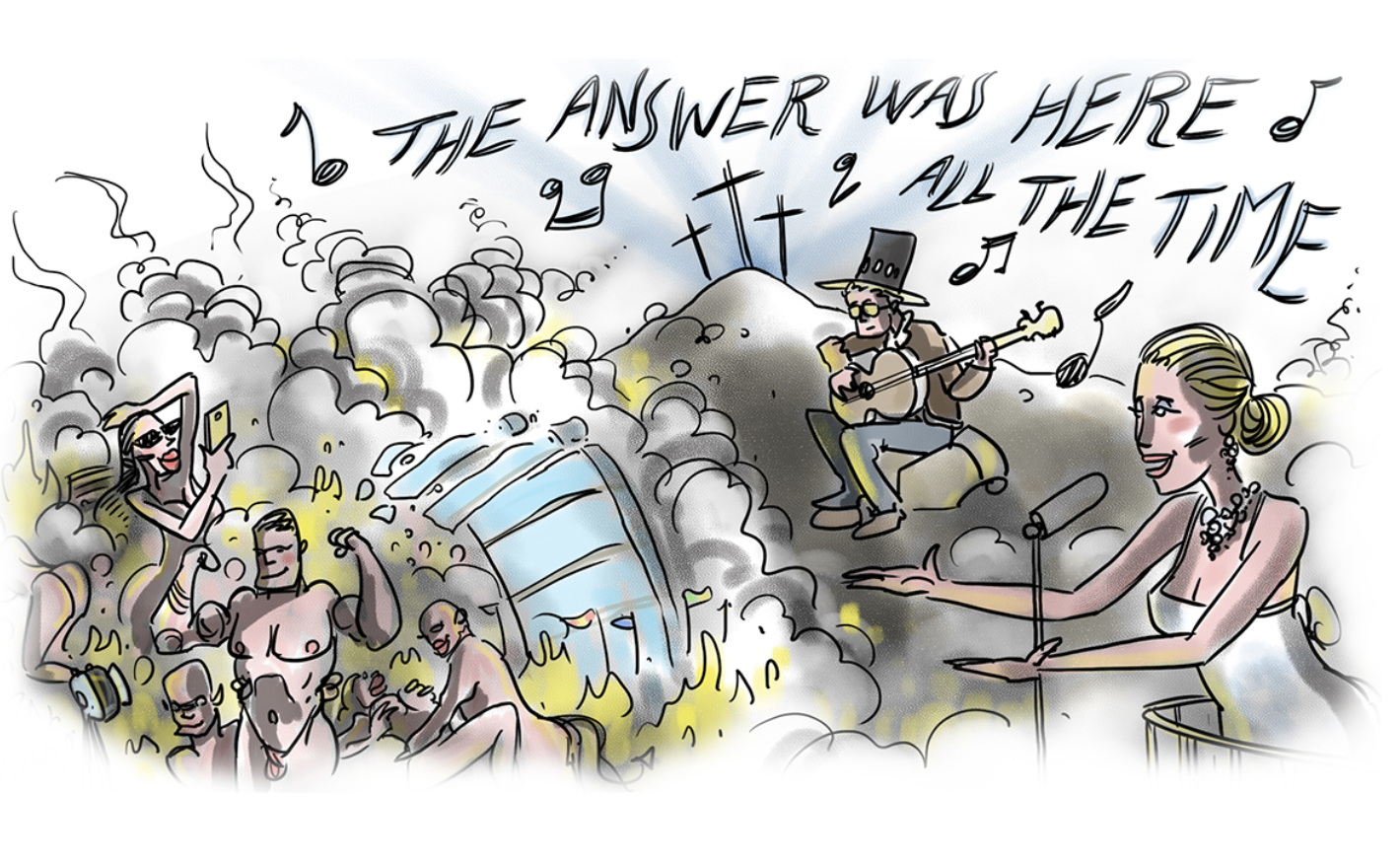
All this now makes frustration, anger, and generational wars inevitable, and exactly this will dominate every political election from now on. A Mandami or a Polanski don’t appear without a very specific reason, and society going forward will polarise between those who believe the State owes them a living from government money that grows on trees, and those who instead intend to go out there and grab what they can off their own back.
A “state of nature” where life is every man for himself.
Indeed so! And being early to understand how that all plays out is the very definition of first mover advantage. And professional strategic marketing in business.
Art always shows us reality early.
Around that same Easter weekend, Netflix premiered a big star movie called Materialists.

Set around the competitive world of modern dating and its brutal, transactional requirements to have a “market” with the opposite sex.
Spoiler alert: Don’t be short, poor, or socially irrelevant.
The twist in the end alludes to the extreme lengths now being considered by young men to achieve exactly that. Wait, wasn’t our new world about inclusion for all? An aversion to any form of body-shaming or discrimination based on looks? The Zeitgeist that gave us fat lasses in Victoria’s Secrets’ kit? But now Hollywood puts A-Listers in a movie about surgically breaking your legs to add 6 inches to your height?
Some may see this as a distinct change in the direction of travel in society, and eventually in corporate HR. A return to the real world of pretty privilege, which never actually went away, but was artificially cancelled by “woke”.

Surprise me, Buddy!
The aforementioned “children of the Millennials” are of course Gen Alpha.
By now there are already so many articles (like this: Adapting Media & Entertainment for Generation Alpha; this: Gen Z vs. Gen Alpha: Traits, Trends, and Insights | GWI ; and this: Gen Alpha Is Poised To Transform The Marketing Landscape) on who Gen Alpha is, the differences with Z, and how one should market to them. They are all flat and not worth your time. Indeed this kind of content is now so easily bettered by a few intelligent prompts on Claude or Gemini that one truly fears for the people and agencies that offer this pap. No-one is paying for this type of insight going forward.
People will reward you to be surprised with fresh ideas and opinions; and told something they don’t already know.
These days that’s so easy.
Here was my own prompt after watching Materialists, that Easter weekend:
Is Clavicular representative of Gen Alpha, realising the world is now very tough for them, with a broken social contract, and going “everyman for themselves?” Less inclusive and empathetic, and more about “mogging” the next guy?
And Gemini in reply?
Understanding Clavicular and looksmaxxxing.
PS: to get a reply like this in 15 seconds is a state of affairs that is truly mind blowing. It will change the entire face of societal education. And over 50% of corporate jobs. Read the reply. Each of us will either be a victim of AI or have it as a superpower. It is on each of us to decide.
The Ascension of Braden Peter, aka Clavicular.
Some may already know of Clav, as he has already been very active on the mainstream interview circuit. 60 Minutes, NYT, Piers Morgan.
He is a very successful online streamer from New Jersey, born 2005, promoting to men his individual credo:
- that one must do everything possible to “ascend” the league table of physical looks, from “subhuman”, up to “chad”. The unapologetic acceptance of “pretty privilege”, now with a new brand called “looksmaxxing”.
- all decisions in life must pass through a filter of personal ROI (Return on Investment). Everything is transactional and nothing is done altruistically. Everyman for himself and on his own, so only dedicate time and resource to positive personal ROI.
- there should be little sympathy for people happy with their position in life, and who are not out to “ascend”. They are to be condemned for the cardinal sin of LDAR (Laying Down and Rotting).
- anyone trying to bluff success or force fake/vanity engagement in life are “jesters” to be truly despised. Inauthentic BS merchants. Jestermaxxing is the ultimate sin.
What about the idea of socialising to meet a girl and maybe have a relationship, even get married and have a family?
Where is the ROI in that?
Many will classify Clav as a minor disciple of the better known phenomenon of the Manosphere, but that would be a grave error. He is NOT Andrew Tate. He is not political. In many ways, he is just a reinvention of what was popular in the 1980s: self-improvement, get on your bike, look after yourself, work hard and be all you can be, don’t rely on anyone else, compete! Don’t cry in your beer!
Mogging is the very definition of fierce competition. American Psycho anyone?
Is Gen Alpha going back to Patrick Bateman, and if so what does that mean?
Clavicular may be just a transient flash-in-the-pan, a footnote, a crystal meth overdose waiting to happen. But if he is the first clear signal of a change in direction of travel, that’s very important.
Clav has also an opinion on sport. It’s not positive. For him it’s LDAR behaviour.
People who wear sports jerseys, and say things like we’re gonna win the Super Bowl next year? Who the f**k is we?
Don’t smirk and sigh. That’s what you did a decade ago for a couple of YouTuber brothers, called Paul.
Insight is currency.
Sport’s own Generation Game.
Nice one Brucey! The last of the great British showmen; the final link to the old Vaudeville forms of entertainment. We all remember his Generation Game.
The FA Cup final was once the greatest sporting day and event of the year, but sadly today’s business of sport has now moved that Overton Window, and those days are gone. Clubs would prefer 4th place for the Champions League, and kids just don’t care. They have already queued up their choke-memes for Arsenal, and the actual 90m often doesn’t even matter. They are just in it for the mogging.
So at the core, if you strip it all back, our industry has a simple debate. Or, more correctly, it has a very emotional and confused debate about something very simple:
if younger audiences and new fans are truly different in what they want to watch, and for what they will pay, how much should the product of sport change to accommodate them?
The Boomer/X generations will soon die off, and if the replacement “fans” have far less propensity to spend on sport, that creates a serious strategic imperative for our sector.
Older fans love their sport, and don’t hesitate a second to pay for it. It is low on the list of sacrifices to be made when disposable incomes are stretched, and we all know some lads who would sacrifice their kids’ schoolbooks before passing up the new 3rd kit. But younger audiences just aren’t as obsessed about full-game sport as we are, and even if they were, they want the product format to change radically to keep their attention. They have also grown up thinking that all content is free, where their attention and engagement is the only entry price to watch.
No, Gen Z will not fucking buy your OTT.
Dan Porter of Overtime delivered this killer line at a sports conference around 2019. It never left me. Because the most impactful insights always need to be blunt. And for an industry utterly underpinned by the cable sports subscription, this is an inconvenient truth.
Streaming subscribers churn with gay abandon, and the smartest media commentators know it.
Very inconvenient!

If that many of your customers cancel, it’s a shitty business.
Evan Shapiro
That simple debate.
There are three responses to all this in our sector.
*
The Innovator.
Like the movie mogul De Laurentiis, from AS Napoli, calling for extreme disruption to attract and hold new eyeballs.
Change everything and be damned! There is no choice. Demography is destiny. A revenue model will be found.
**
The Traditionalist.
Don’t change an iota of sport to attract transient fans, who won’t ever put their hand in their pocket.
“You can’t cut off your base to try and find someone else. Ignore them.”
***
The Optimist.
People who think that kids will finally mature (“leave childish things aside”) and eventually turn into the type of sports customer their father was. The hope that these new kids will grow out of “their crap” and find true sport. It will all work out through osmosis.
[ Really? Could I interest you in a London bridge for sale? ]
Every other current debate in our industry flows from this:
YouTube ubiquity or a rights cheque for exclusivity?
Subscriptions or ad revenues?
T20 or Test cricket?
Kings League or Kaiserslautern?
Bad Bunny or Bovril at half time?
Add in culture wars, often polarised around age, and it’s hard not to conclude that sport is wading through treacle in its own Generation Game.
It’s not dealing with any of this well. A confused muddle of compromise.
Being all things to all men is always LDAR!

To order the Limited Edition of Roger Mitchell’s book “Sport’s Perfect Storm“, click here and fill the form.
Listen to our “Are you not entertained?” sport management podcast here.
To find out what we do in change management, have a look here.
For our C-suite management services, read here.
Here you can know more about our content development work.
Discover our Corporate Learning service here.
Get to know more our “Sport Summit Como” yearly sports management event here.
If you want to read our own story, go here.