

You never know the minute, and you never see it coming.
In 2001, when my old boss Riccardo Clary left the music industry in his mid 30s, at the peak of his reputation and earning power, I just couldn’t understand it. He was genuinely brilliant, and in his prime. When I insisted to know why, actually quite angry at him, he just sent me a video:
Merely weeks before being shot dead, John Lennon finished this song about how he had finally found real peace. The lyrics are crystal clear, and Riccardo, I guess, saw himself in them.
People say I’m crazy, doing what l’m doing Well, they give me all kinds of warnings to save me from ruin
When I say that I’m okay, well, they look at me kinda strange
“Surely, you’re not happy now, you no longer play the game”
People say I’m lazy, dreaming my life away Well, they give me all kinds of advice designed to enlighten me
When I tell them that I’m doing fine watching shadows on the wall
“Don’t you miss the big time, boy. You’re no longer on the ball”
I’m just sitting here watching the wheels go round and round
I really love to watch them roll
No longer riding on the merry-go-round
I just had to let it go Ahhh, people ask me questions, lost in confusion
Well, I tell them there’s no problem, only solutions Well, they shake their heads and they look at me as if l’ve lost my mind
I tell them there’s no hurry, I’m just sitting here doing time
Humans change, and Lennon was a man no longer up for raging against the machine, for the bed-ins, the peace marches, the Timothy Learys, the Green Card battles, the lost weekends. No longer playing the game, no longer in the big time.
A state of contentment that would be abruptly ripped away from him, in front of the Dakota, for the whole world to see. A guy who took 40 years to work out who he really was, finally gets there, and then has it end like that, from the cold hand of the catcher in the rye.
Timing in life and business is absolutely everything, events are very unpredictable, and indeed you never know the minute.
The truths about serendipity and sliding doors, or just simple good and bad luck, have always fascinated me, (and are in fact the core of The Confessional podcast). None of us ever see our destiny unfolding in the moment.
Riccardo, with all that potential, never worked again, and has spent the last 25 years very quietly, going to bed early like Noodles, hopefully a happy man. As I’ve got older, and wiser, I finally found my own explanation as to why. He was a genius promoter of art, builder of market share, creator of team spirit, and in 2001 he saw vividly what was about to happen to the music industry and the Majors. He wanted no part in the inevitable downsizing of his artists and staff, because you can never ask Alexander the Great to manage the decline of an Empire. Especially their own. They won’t do it. They can’t.
Alexander died at 32.
Are we living one of those invisible destiny moments?
Moderating Como, with 50 of the most intimidating names in your industry, is not a walk in the park. You are petrified to waste their time or, heaven forbid, bore them with pap and re-heated porridge. That anxiety increases as the Summit approaches, which it now does.
So in preparing what is hopefully fresh challenging conversation, you need to disconnect your head from all the accepted wisdom and common knowledge, “trust your own swing”, and hopefully find some genuine insight. Something that jives, that entertains, provokes even. Something you believe to be important.
Today, a few weeks before Como, I think of this:
The latest groupthink in our sector is that sport is an asset class uncorrelated to other investments, perhaps even a portfolio hedge. And that’s why valuations continue to explode. By reflex, one is forced to conclude that our industry, and its commentators, actually understand very little about finance, and certainly don’t ever perceive the asymmetric risks of stock markets, arguably more precarious than ever before.
Which, when fully explained to them, may result utterly terrifying.

This type of terrain is core Albachiara DNA, and in fact the book “Sport’s Perfect Storm” is really nothing more than a well-disguised macroeconomics, risk, and corporate finance textbook. Today’s Column can be considered as an update on all of that, for Q3 2026.
Beta Beta Beta!
In portfolio investing, hedging is not the same as diversification, and I fear the “thought-leaders” in sport don’t really get the nuance. But it is so important. We spent a lot of pages in “The Storm” trying to explain the difference, by using the concept of Beta.
Ask any job candidate to put a number on Beta for your company and industry. This will eliminate 95% of people who will never make any material difference to you. The 5% that can articulate Beta are to be hired on the spot.
– Sport’s Perfect Storm
If sport is non-correlated to the markets, some kind of hedge, its Beta would be negative. But, in an industry whose revenues come from advertising, sponsorship and fan discretionary spending on leisure, that is truly kindergarten thinking wrong.
Perfect correlation with the markets is a Beta of 1. Those who read “Sport’s Perfect Storm” know that sport is in fact high Beta, especially in Europe, well above 1. Liverpool FC, say 2.5 now. American sports less so, with the Lakers say 0.9, being generous. But all most definitely positively correlated. No asset in sport has negative Beta.
If it gets choppy, sports assets will not be anything resembling a hedge.
Does our industry understand “Chop”?
There are some excellent sport commentators everyday shining a light on the opaqueness of (mainly) football financial statements. Admirably dissecting all the attempts of our clubs and franchises to game the sustainability rules of national leagues and UEFA. Explaining to us how clubs deeply in loss and debt can still spend hundreds of millions for one player.
Whilst super insightful and entertaining for fans, spending time on football club submissions at Companies House is not where the juice is; not where a serious investor will get the clues on where to make, or protect, fortunes.
Most sportsbiz commentary today, with some notable exceptions, comes from people who have no real knowledge of Wall Street or the City. Haven’t managed money, been on a trading desk, worked on any strategic corporate finance deals, experienced a downturn in the business cycle. What they scribble and chat about is “knowledge” that they scrape from each other and the Internet. This criticism applies to almost all newsletters, substacks, podcasts both sides of the pond, and can be considered a finance version of “show me your medals”.
These people have no direct experience of this world, as it’s not their’s tbf, and understandably they can’t see the forest for the trees.
This is the forest:
In Europe, in team sports, the sector as a whole loses material amounts of money. It de facto only exists year after year, if fresh investor capital is still there to refinance the losses. Our (open) leagues, in football, in rugby, in county cricket, cannot control player cost, and they burn cash every single season. European team sport is not a serious business, it probably isn’t a business at all, so it has never been valued on anything resembling classic business metrics, like multiples of real profits or free cashflow (the “micro”).
A hosepipe of abundant cheap capital in the last 20 years has created excess demand across all asset classes, and resulted in the “Everything Bubble”. All our valuations have therefore lost touch with fundamental reality, and any “micro” analysis alone is profoundly incomplete. Because it assesses only the soundness and stability of the boat in the ocean.
The “macro” instead is the ocean, and if it turns “choppy” even the most solid boat is gonna struggle.
I’m very very sorry to say this, as I’m sure some people will get offended, but the investing community into European team sports franchises too often resembles Di Caprio and Hill.
Superficial and dangerously complacent. And it’s getting worse.
Will there always be a fresh credit card behind the bar?
This has to be the key question for our industry. Arguably, everything else is discussing the seating arrangements on the deck of the Titanic.
We need new capital every year, so the concept of market valuation today (and tomorrow) is entirely dependent on “demand” from the providers of it. And that really should be the main thing upon which a smart investor does due diligence. Will the capital demand continue? Increase? Decrease?
But almost no-one does that diligence. No-one looks for the “chop”. No-one asks what is driving the quantums of capital, and if those flows are sustainable. There is a flawed underlying assumption in the modelling that the macro is always a constant, or improving.
The sports industry in this way thinks a bit like a fancy wine bistro:
“Leave your credit card behind the bar till it’s maxed out. Then you can piss off, coz we never liked you here anyway, and we will quickly find another rich sap to replace you.”
Sport (in Europe) is frankly overly complacent that a new credit card will always be there. That there will forever be an unending wall of money ready to prop up the industry, its losses, and its valuations.
In 2026, this is an error. Because you never know the minute, right?
Great investors see risk better than others.
Many readers at this point will be recognising the same schtick as the book. And perhaps sighing. Because that thesis hasn’t yet played out, and if anything “bubbles” have gotten bigger.
A company no longer growing or innovating, like Apple, is valued at 35x profits, and that is patent nonsense hard to reconcile. The Lakers at 71x profits, “hold my beer”!
People are still making a lot of money in these bubble markets, waltzing away on the dance-floor, slurping from the punch-bowl. One can’t blame them; its their job after all. If the music’s playing loud, you always dance!
Many comment that the entire bear pessimism is simply wrong and that no bubble actually exists. Sport is expensive because there is a growing desire to own its trophies and prestige, the way rich people want to possess a Leonardo. The asset is scarce and the numbers of billionaires around is growing.
That’s where I’m less empathetic. Because these people never extend their simile, and note that the art market is in fact very susceptible to boom and bust, and tightly correlated to stock market crashes?
Why do they miss that bit? Because they aren’t very good and are blindly riding a bull market are complacent.
Ps: Global art auction volumes dropped 60% on the back of the Japanese stock market and real estate bust of the early 90s. They had created a massive bubble in Impressionist art, which obviously kind of disappeared overnight.
Sadly, there is just not as much professional reflection as there should be on the “chop” around us, because all great investing is always about understanding risk. Especially asymmetric risk. The kind that carries you out on your shield.
You never know the minute, right?
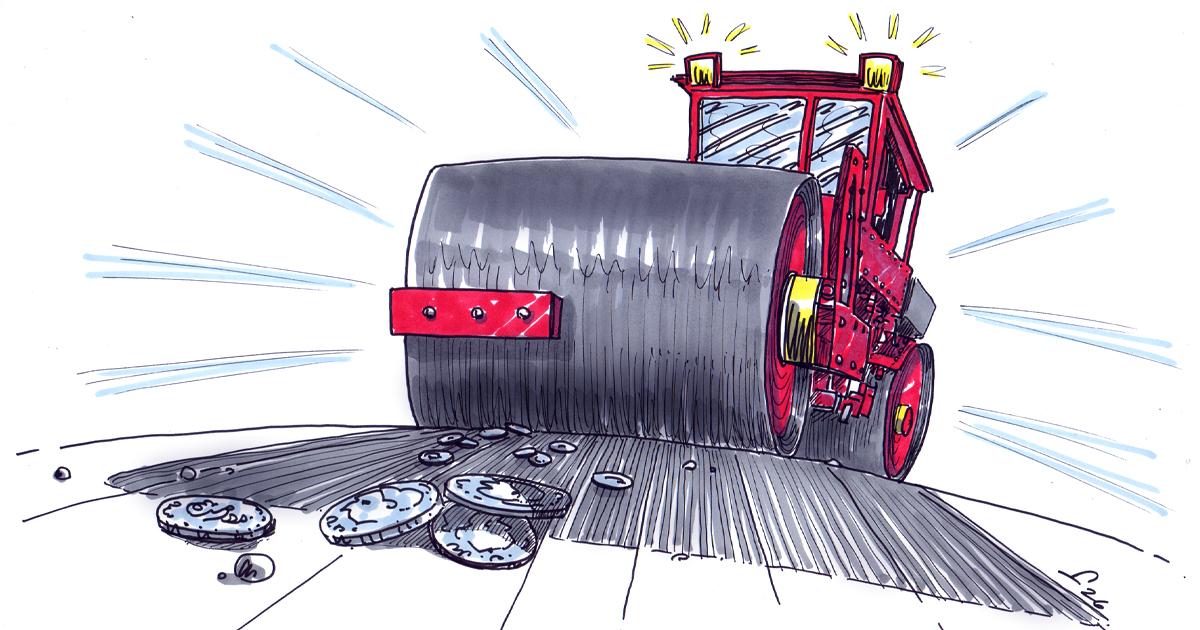
Picking up dimes in front of a steamroller.
This is one of the most famous analogies we have for asymmetric risk. I first heard it in the City in the late 80s at James Capel. An old trader dismissed my smug portfolio gains with a kind smile and that killer line, and I’ve never forgotten him to this day. He was right.
Dimes and steamrollers. Such powerful imagery.
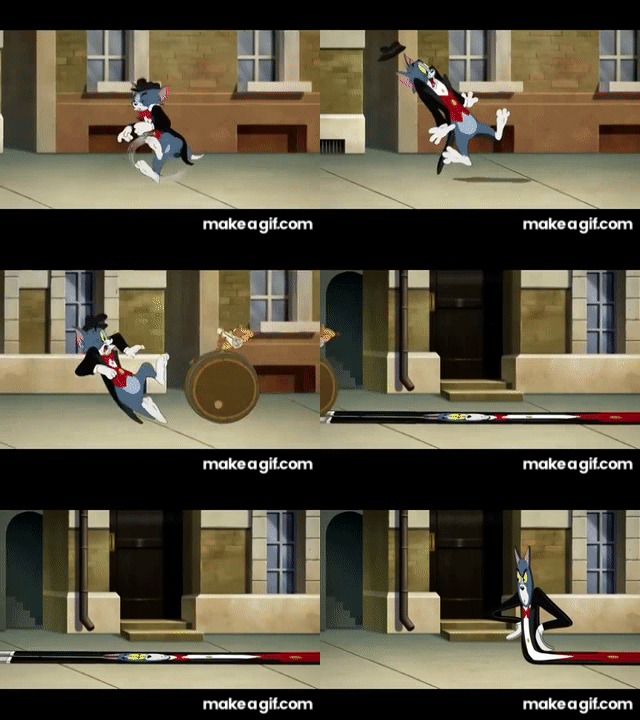
[A strategy or behavior where you capture frequent, small gains (the dimes) while exposing yourself to a rare, catastrophic loss (the steamroller). Most of the time, you successfully collect the change and look like a genius, until the steamroller eventually catches up.] – Gemini
This is asymmetric risk, and investors in sport are all now playing this game, whether they realise it or not. Several – I’m sure – do feel like a genius, whilst also being tragically oblivious to the steamroller’s shadow. This will end badly.
I am correct on valuations, and I trust my swing completely. Market prices are as high as they have ever been in history, and the macro conditions that enabled all of that may be reversing right in front of our eyes. Just because it hasn’t happened so far is no guarantee that it won’t tomorrow.
It works until it doesn’t.
Nassim Nicholas Taleb
Risk Analyst and Author.
Risk mitigation, therefore, not wave-surfing, is the real skill of proper investors in Q3 2026. It’s called a hedge fund for a reason, something too many people with fees to collect have now forgotten. If you don’t believe me, ask any investor or General Partner what their portfolio hedge strategy is for a real recession or stock market pull-back. If they say buying sport IP, make a private note, and quickly walk away. Most won’t even understand the question.
Events, dear boy, events.
History, with hindsight, will be kinder or harsher on everything and anyone, like realising now that Harold McMillan was right back then, and we had indeed never had it so good.
Events change things very quickly, and proper macro guys always understand the criticality of timing, good or bad, and how it can affect their ROI. There is never in the moment any clear judgement of right or wrong, winning or losing, and actually the final score of anything often depends on the vagaries of timescale.
Being too far ahead of your time is indistinguishable from being wrong.
Howard Marks
Billionaire Investor.
The markets can stay irrational longer than you can stay solvent.
John Maynard Keynes
Good timing is the key differentiator for great investors, and often being positioned to do nothing till the fog clears, to wait for the fat-pitch, is the most elite skill of all.
The successor to Mr Buffett already seems to have forgotten that sadly, and our investment funds, with a pressing imperative to deploy capital, also have no desire to hear it.
If valuations don’t make sense, simply get off the merry-go-round until they do, and keep your powder dry. Sometimes it’s better to just sit and watch the wheels go round.
Right said, Fred.
So for the pro there is no escaping the need to study “chop”. To look more closely at the macro. To consider the inevitable reversion to mean that will always come.
Let’s begin our diligence, Because this actually is the whole ball game.
Today, on any basis one wants to use, we are living in the most unexplainable of bubbles, and to quote finance legend Jeremy Grantham, the current bull market we’ve witnessed over the past several years has been the wildest in history. Valuations have expanded exponentially in the 20 years since The Big Short in 2008, no lessons have been learned, and, by God, that also includes sport. Anyone with a classic background in finance and economics sees this as clear as day. It is just not up for debate.
Stock market valuations have reached extremes never before seen, 50% higher than even during the height of the Dot.com Bubble in 2000, whether measured on Market Cap-to-GDP or Price-to-Sales ratios.
Fred Hickey, “The High-Tech Strategist”
Fred is not someone any reader today will have heard of. He is also largely unknown in the world of mainstream financial media like the FT, the Economist, CNBC, Bloomberg.
People like him, like our own Grant Williams, self-publish their work behind a paywall, to a community of normally very rich subscribers, who always want the best independent thinking. Many have made a lot of money following people like Fred, long and short. (Albachiara is a happy subscriber).
This is where the so-called “smart money” hangs out, and it is an exclusive tribe, very careful about who has the credibility to get in. They are a funny bunch, many of whom I’m sure are on the spectrum. Amusingly, the storied macro legends of this club all seem to have impossibly exotic names: for Maradona and Messi, read Stan Drukenmiller and Paul Tudor Jones. There are also the maverick players who maybe over time get a little bit too eccentric.
For Jinky Johnstone read Hugh Hendry! A slum boy from Castlemilk in Glasgow who rose to the top of the hedge fund industry, and who now calls himself the Acid Capitalist. One will understand quickly from this clip why Hugh’s style finds favour in Como 😉.
I recommend you panic.
Hugh Hendry, BBC Newsnight
The misunderstood financial doping of prosperity.
Macro has been very very kind to all asset values since the 80s. So much so that people too easily confuse this bull market for their own brilliance, causing today’s dangerous complacency. Very honestly, my generation didn’t have to be that smart to make life-changing financial returns on capital: by simply buying a house, or passively planting savings and pension pots in a stock market index fund. And just holding that position.
A rising tide and all that. Buy and hold, 60/40, with some real estate. Easy-peasy!
These facile returns made by Boomers and GenX are now no longer available to Gen Z, and represents the very specific reason why politics today has seen the rise of socialism and communism amongst young voters. This in itself is a good example of seeing and understanding “chop”.
These kids are very resentful of us, but can’t articulate their anger very well, so I will do it for them.
My generation has created macro economies that pumped nominal growth artificially, by excessively low interest rates, obscene money printing (most around COVID), and especially with taking-on debt. The total global debt stock has trebled over the past 20 years, skyrocketing from roughly $130 trillion in 2005 to a staggering $350 trillion. All left on the shoulders of today’s kids, who are now understandably attracted to delusional Commie social-redistribution politicians. Total debt left to Gen Z now sits at roughly 305% of global GDP, meaning that the world owes more than three times what it economically produces in a year. Translate that into your own personal budget and realise how crazy it is. Many people reading this would have a debt over a million pounds, and be compounding serious interest on that number every year.
All this paper money has pushed house prices well beyond the pockets of our children, and the governments of the world have done everything possible to keep them there. A sure-fire bet known as “The Fed Put”, where everyone knew the politicians had a safety-net under the markets, meaning that investment advice didn’t need to go further than “Don’t Fight The Fed”.
Our free markets therefore no longer reflect the underlying health of economies, as Adam Smith intended: the markets are the economies. In short, the performance of GDP in the West for 30+ years has been juiced more than Ben Johnson. It’s all false productivity and false prosperity, and we all benefited. No wonder “soak the rich Boomer” is a vote-winner.
Can all this continue? Because if it can’t, valuations in every asset class, including sport, could easily take a 50% haircut. No hyperbole. And you never know the minute, right?
Articulating the “chop” risk in sport.
All valuations in sport assets, in media rights, in PE sport funds, in private debt financing the industry, depend on the capital market flows of available cheap money at least staying stable. Again, not up for debate.
Let’s have a desktop-review look at the likelihood of that.
*
Middle East money
If LIV, Neom and Newcastle are anything to go by, the direction of travel is in reverse. All explained in the Landman article. They are retrenching to domestic, husbanding resources, as missiles rain down, and VOL goes through the roof. Boom times are over.
**
Billion-dollar sports funds of private equity and debt.
This whole model is now completely clogged up, a truth only hidden by their own continuation funds buying them some time. There is just no more cheap capital, interest rates have risen, there are no real exits, capital is trapped, IRR is tanking. All that is causing obvious obstacles to raising new funds, as investors understandably baulk. Ultimately, the private equity industry is now learning a harsh lesson: you can’t eat “paper wealth”.
***
Debt
Governments and corporates are maxed-out, with now no more space to take on and service additional debt. Existing loans are falling due and need rolled over, especially in the USA. 20% of Uncle Sam’s $40 trillion National Debt is short-term and has to be replaced every year, in addition to its $2 trillion annual deficits. There are debt death-spirals like this absolutely everywhere in our capital markets and the arithmetic is already clear. Central bankers have painted themselves into a corner but the timing of that existential epiphany is not yet mature for most operators.
****
Beyond the scope of this Column, there are serious cracks in the global financial plumbing all over, and the early symptoms can be seen in places like Korea and Japan.
*****
The disruption to global supply chains and logistics costs from the Hormuz closure are still to kick in. Globalisation unwinding will not be pretty.
******
Then there is AI, the real black swan today. Our steamroller in full vivid Technicolor. That deserves its own spotlight.
Laurel and Hardy economics.
In the last couple of weeks we have seen a new trope around “sport as an asset class” after the recent valuations of The Lakers and Liverpool FC.
Investors are piling into sport because it’s counter-cyclical and defensive against the excesses of bubbles.
Utter drivel. Debatable. The bubbles are too big.
GDP growth and stock markets in the last 3 years have all benefited enormously (on paper) from the unimaginable amounts of investment into AI infrastructure. This is not a new subject matter for our Column, so let’s leave the floor today to the real expert, Fred:
The race to build the biggest datacenters started with Microsoft and Google, and now includes Amazon, Meta, Tesla, Oracle and many others, including leading Chinese tech companies. The result has been the greatest overbuild of capacity (malinvestment) in history, with the possible exception of the great railroad buildouts in the late 1800s. Those railroad mania(s) led to two market crashes, the Panics of 1873 and 1893. Sadly this AI capex shows no signs of abating, with around $800 billion forecast this year and over $1.1 trillion in 2027, per Goldman Sachs’ and Morgan Stanley’s tabulations. This level of spend is scarcely affordable and is decimating the cashflows of the biggest companies in our stock markets. Nikkei Asia recently reported that the five top U.S. hyperscalers collectively have $1.35 trillion of debt on their balance sheets plus another estimated $1.65 trillion in off-balance-sheet hidden debt (including lease and purchase obligations). With the U.S. capital markets stuffed to the gills with all this paper, Amazon and Alphabet have had to go overseas to find lenders. Alphabet has borrowed in Euros, British pounds, Swiss Francs, Japanese yen and Canadian dollars. Amazon borrowed in Euros, Swiss francs and Canadian dollars. Everything here is now being reflected in the share prices and CDS costs (essentially the insurance against a default on bonds).
In short, the AI war is causing all of our best marquee companies to over-invest to the point of bleeding out, and, remember, these stocks make up a huge weighting of the market indices of your investment portfolios and pension pots. You are all at risk more than you know.
It gets worse. No-one is making any material revenues out of AI, and the numbers they do report are all circular, via vendor financing. The smart rooms with people like Fred speak of nothing else.
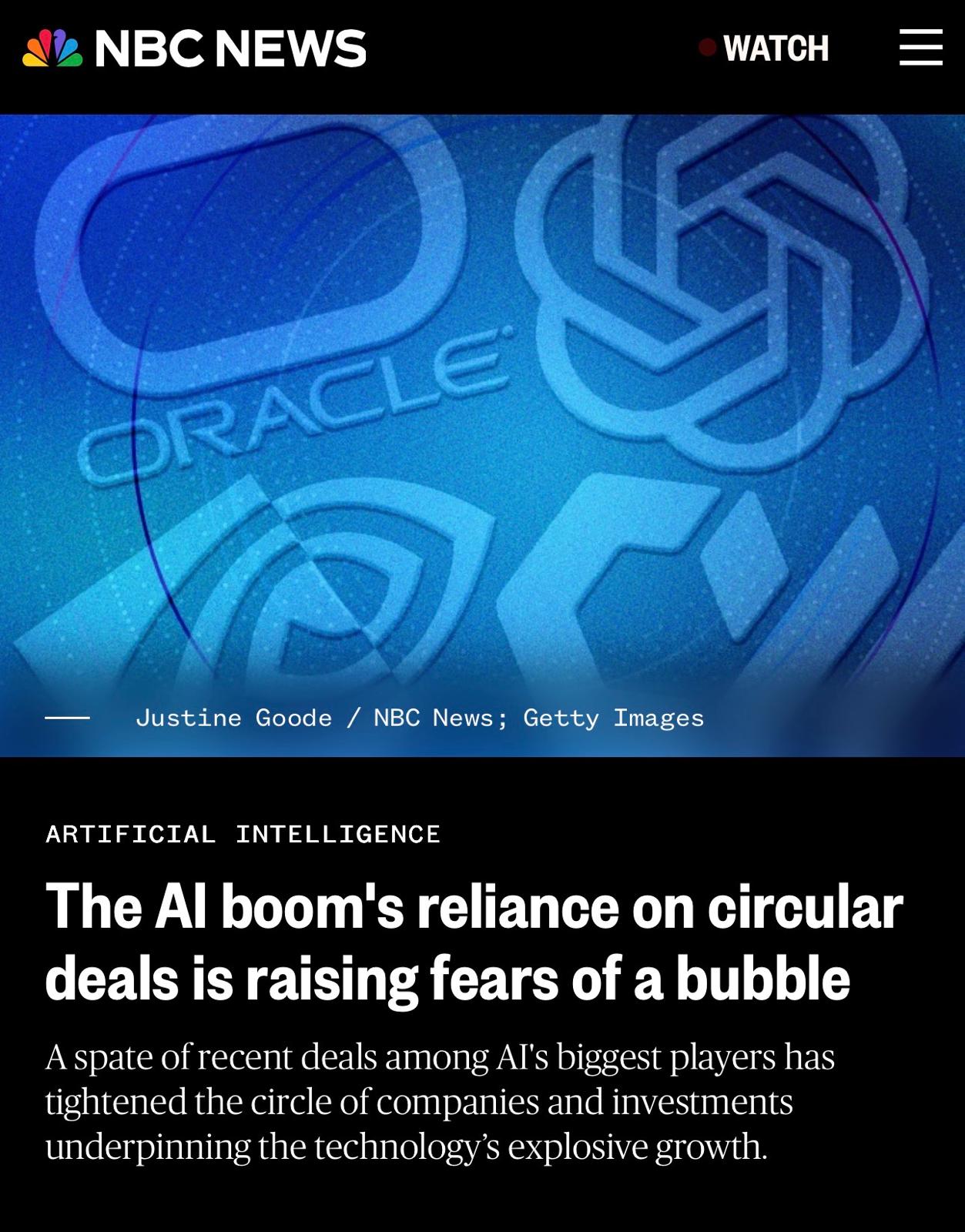
Every day we see the Ponzi in action. Nvidia recently “partnered” with six of Wall Street’s largest investment and finance giants (Apollo, BlackRock, Blackstone, Brookfield, Goldman Sachs, and KKR). The money they will lend is intended for Nvidia’s customers, including AI labs, cloud providers, and enterprises, who all badly need capital. This arrangement essentially allows Nvidia to leverage Wall Street debt to supercharge the buying power of its own customer base, keeping the AI infrastructure buildout heavily funded, without putting leverage directly onto Nvidia’s own balance sheet.
It’s laughable, so bad it’s even now become a comedy meme.
This Laurel and Hardy shell-game is the poster child of “chop”. It really is. Also because all this overbuild and malinvestment is for a product that arguably is already being rendered uncompetitive and obsolete by Chinese open-source alternatives. Fred again:
There are now nearly equally capable tools from Chinese open-source model companies priced at fractions of the cost of the expensive closed-source models from OpenAI and Anthropic. That development could be catastrophic for the U.S. modelers. On Friday Axios headlined a story: “Chinese AI lab DeepSeek released a powerful new coding model that charges pennies for vast amounts of code, the latest sign that some of the smartest software on earth is rapidly becoming a commodity.” On Thursday, this from CNBC: “Adoption is moving quickly. During the last week of June, Chinese models accounted for 48% of traffic tracked by OpenRouter, up from 20% a year earlier. U.S. models fell to 32% from 74%.” A few weeks ago, Coinbase, a U.S.-based company stated that it would be cutting its AI spending “nearly in half,” by defaulting to open-source models when warranted.
To use an appropriate gentle vernacular for the Sabbath,
FFS!!
So here, in very tight summary, is what this author today calls “chop”:
The companies who represent a huge weighting in the Western economies and stock markets, have spent trillions, borrowing money they don’t have, to build a product that has no pricing power and is already a commodity. This could represent the greatest malinvestment of all time, and its unwind will be catastrophic for the macro flows of capital into every market in the world.
Is the steamroller coming into focus a bit more? Or are you still in denial? Would you like something more sport-specific, easier to touch, to change your mind?
Who controls Paramount and WBD, some of the biggest global bidders for sports rights? Utterly underpinning the major listed sport IP vehicle TKO. Et al!
Oracle.
Oracle and the Ellison family have bet the farm on AI, at the same time as trying to get a huge politically-charged media merger over the line. Let’s not even mention SailGP.
But they are arguably the weakest and most vulnerable army in the AI war of attrition. Fred, one last time:
Oracle’s balance sheet is in the worst shape of them all, with net debt of $98.3 billion equaling 110% of their estimated fiscal year revenues ($89.3 billion). But that’s just Oracle’s visible balance sheet debt. Reportedly, there’s an estimated additional $273 billion in hidden debt that Oracle may be on the hook for in the future. The result is that Oracle’s credit default swaps (CDS) has skyrocketed.
Just as well sport is a hedge, right?
The crooked contagion of sports investing.
It is always the price of the debt (yield) and its insurance cost (CDS) that gives early insight on “chop”, exactly as it was for mortgages in 2007/8. All the flags were there back then, yet everyone – to their eternal shame – happily chose to ignore them. Big banks, auditors, ratings agencies, cheer-leading financial media.
Superficiality and complacency is always the going exchange rate when fees are very juicy.
Q3 2026 is now Groundhog Day, because the evidence is all there once again. Yields everywhere are exploding north.
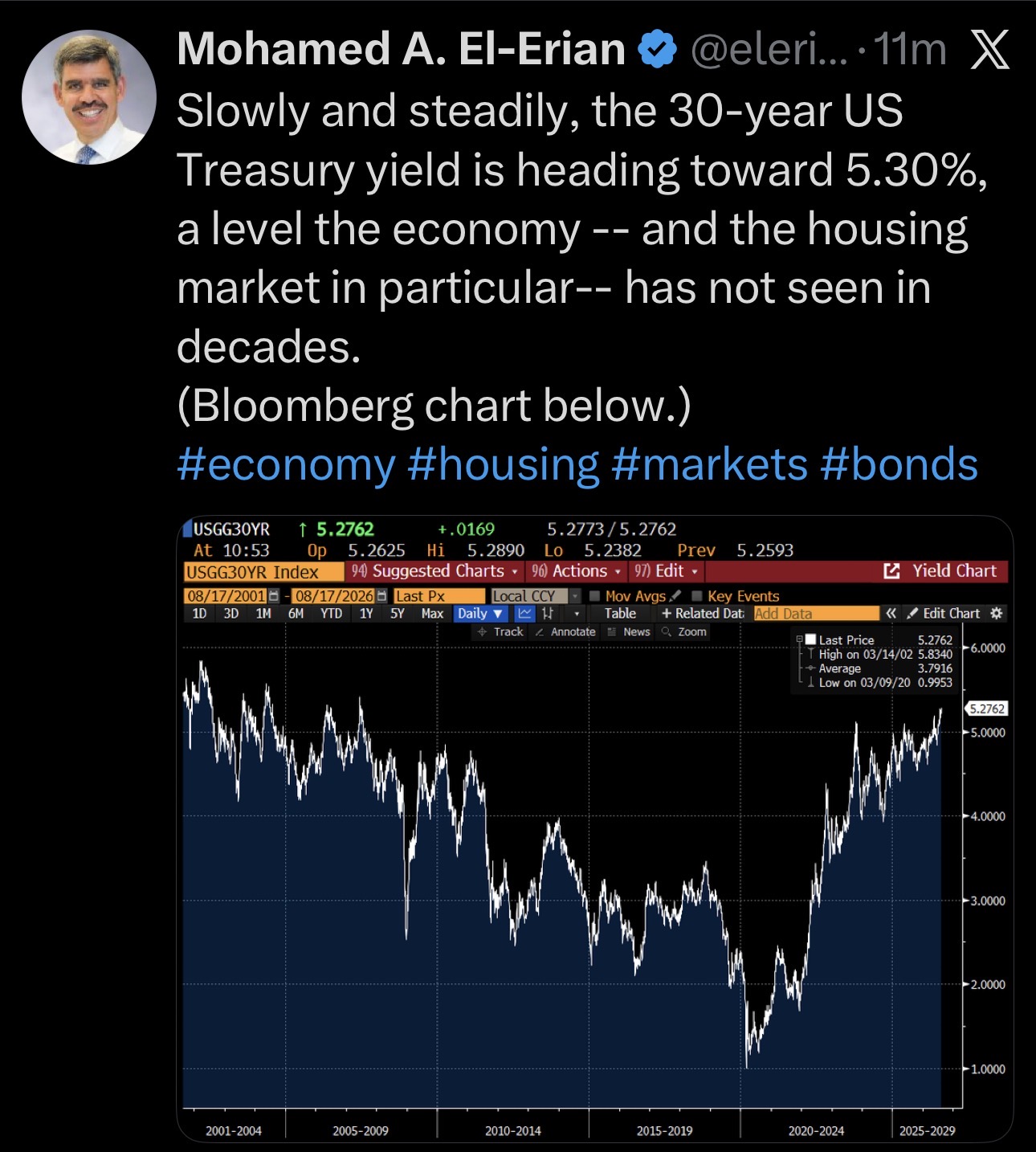
Private credit and shadow banking in general are just much more fragile than people want to see, and sport is in the middle of a lot of very suspect inter-connected stuff, much of which passes through the fog of insurance cashflows. A very recent piece on the debacle of the once-lauded sports fund 777, is also both illuminating and terrifying.

The scale of the financial collapse of 777 Partners is truly epic, yet very little notice to this massive default has been paid outside of the specialty media. We believe that the unwind of 777 Partners and the literally hundreds of affiliates involved in this fiasco provides a picture of how the private credit trade is going to end. Millions of retirees who depend on life insurance and annuities could be affected by unsound management practices by private credit and equity managers who care only about profits. People in the private credit trade will tell you that raising new money today is almost impossible. Why? Because there are growing signs of contagion in the insurance sector after years of dubious business practices by insurers controlled by private equity and credit firms. As details of some of these situations emerge, we suspect that the mainstream financial media will become more engaged.
The word to file away there is “contagion”. The smart money already knows how bad it is, and sport (that wonderful hedge) ironically gives us the best example so far.
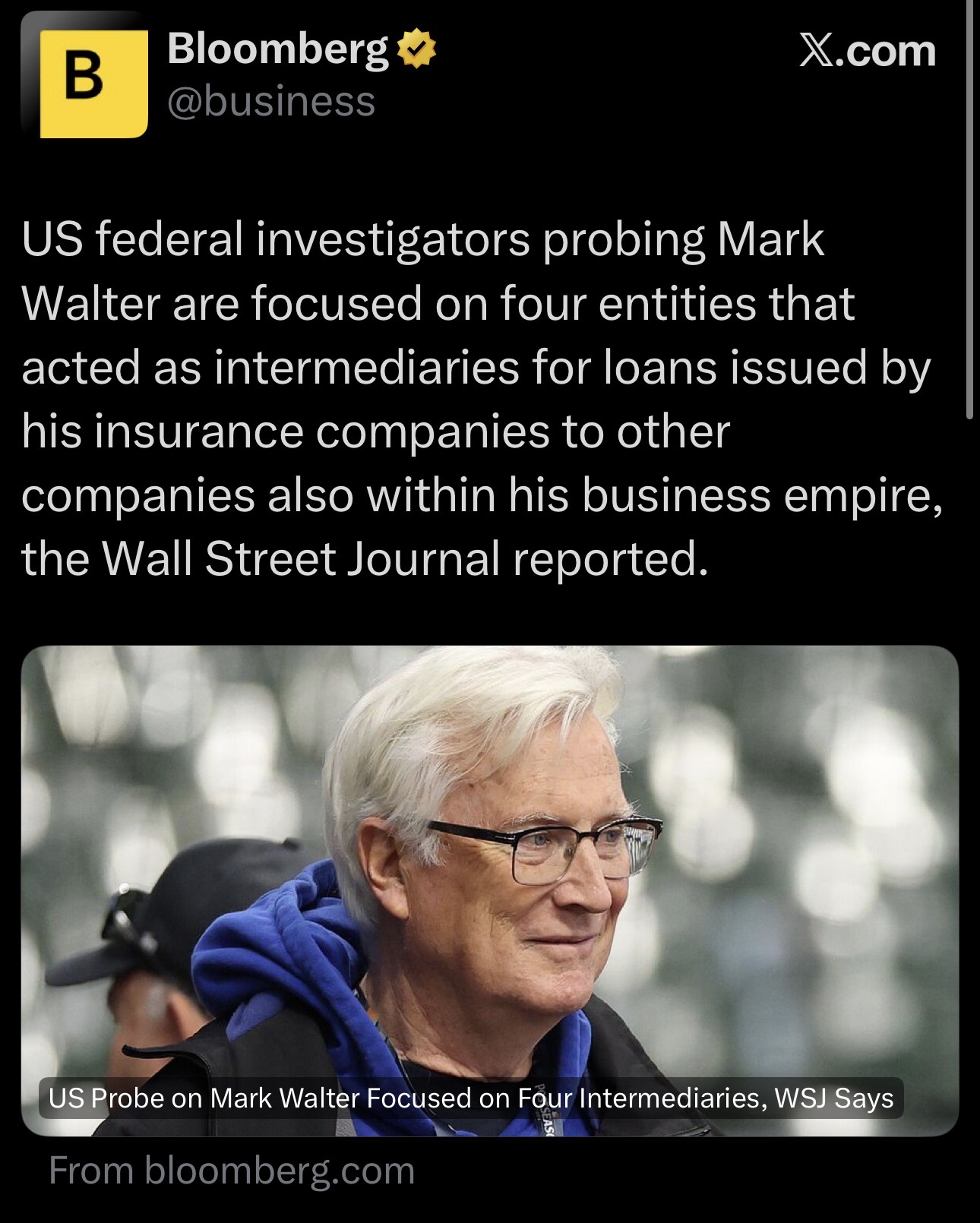
Just as well sport is non-correlated, right?
Mark Walter is the chap who was forced to sell The Lakers this month. He is also in at Chelsea (for now), and has capital in the Dodgers, WNBA and motorsports. There are clearly a lot of famous player contracts and unpaid transfer fees at significant risk.
You never know the minute right? The minute when things all start to unravel. For Mr Walter, that was this week.
Did anybody really watch The Big Short? How it’s all fine until it isn’t? How the naysayers are ridiculed until they aren’t. How the Jenga Tower falls?
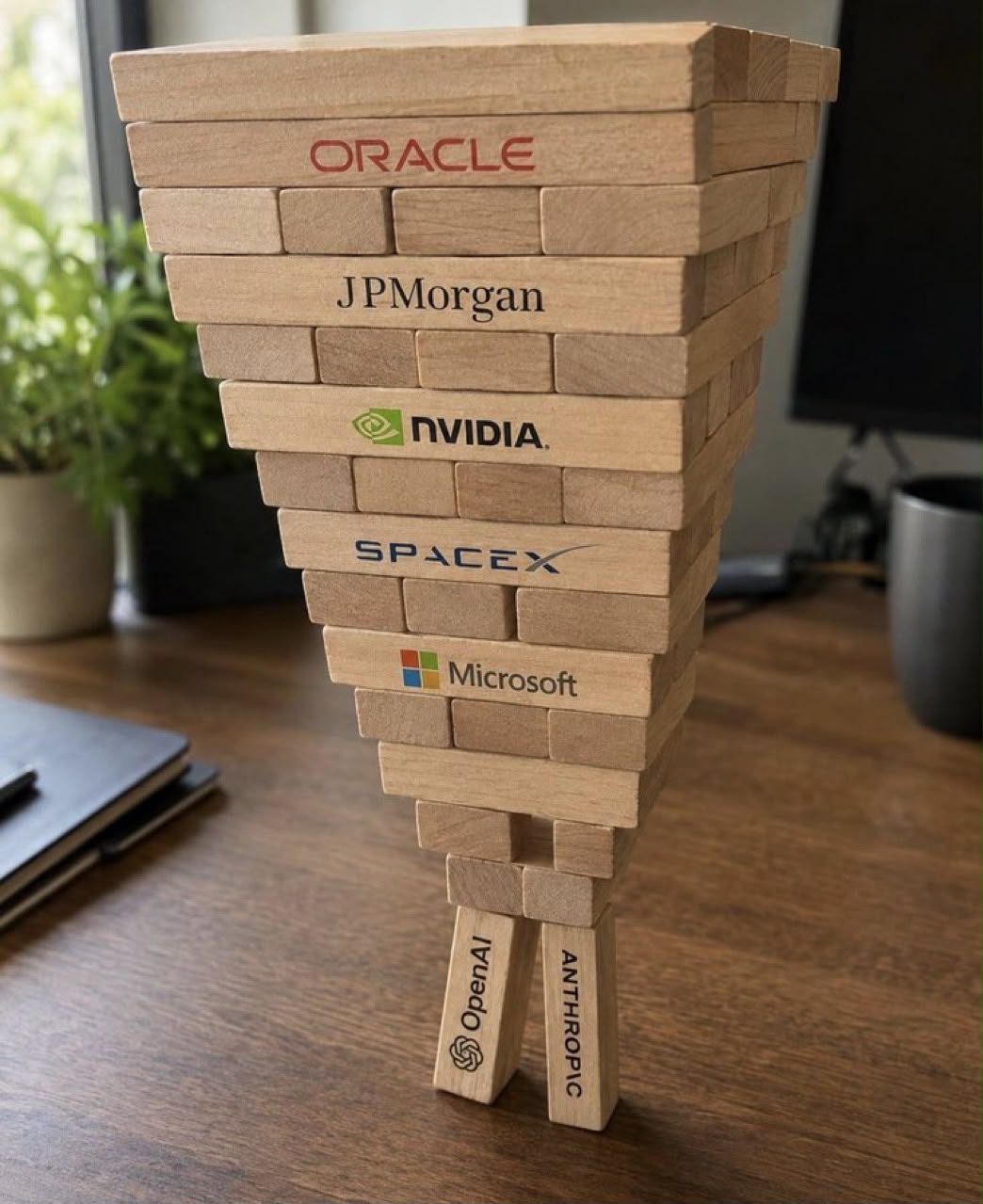
Just don’t say you weren’t warned.
Some days it’s hard to sit in Como and not feel very frustrated because, ultimately, you want to help good decent hard-working colleagues, but you feel they just aren’t listening.
Sport’s Perfect Storm is close.
The combatants in the AI trench warfare are undeniably mission-critical to the health of Western stock markets and pension annuities. They get re-rated down and it’s a bloodbath. Everyone dies!
Sport (in Europe) doesn’t generate its own free cashflow, so there would be no fundamental tangible value to fall back on. If the capital markets have a little accident, there is a big problem. If it’s a spectacular shunt, the contagion absolutely spreads like a virus without mercy. Assets in the sector would be picked up for pennies on the pound. Some will be hit very directly, like anything to do with Oracle, Paramount, WBD and SailGP, but also everyone else indirectly. YouTube, Amazon, Meta, are the great white hopes to prop up media rights, and they dominate discovery, distribution and engagement strategies going forward. All bets would be off.
A natural hedge my arse.
Frustration turns to anger as one realises that almost no-one cares to talk about any of this in what passes as industry commentary these days. From big brand publications also, not just the jobbing podcasters with no medals to show. Mark Walter and 777 are serious canaries in the coal mine, and God knows what other sports assets have been bought with insurance money flows, or other frauds.
It feels good to be collecting dimes, doesn’t it? Laughing at the misplaced pessimism of the Cassandra? Believing that the sport “asset” you paid 71x profits for is some kind of hedge? Good luck with that. Just know that the steamroller is now much closer than you think, and moving quicker than you realise.
Because you never know the minute when you will meet Mark Chapman.
Hope from Waddingtons.
Which, when fully explained to them, may result utterly terrifying.
There is no way this Column is ruining everyone’s Sunday brunch without a glimmer of hope. It is this.
The “chop” we have articulated has, in some way or another, been around since the crash of the late 80s. Every time it has looked to be getting a bit out of hand, (dot-com bust and 2008 being the obvious ones), our governments and central bankers have thrown the kitchen sink at saving markets. Printing money, lowering interest rates, more debt, all of which jump-start valuations dramatically every …single …time. Politicians know only too well that the markets are the economy and it is all now too-big-to-fail. So they will bail them out as long as they possibly can. They will buy time.
But do they practically still have, in Q3 2026, the macro toolbox to kick the can down the road one more time? With current levels of global debt? With exploding yields?
What if the bank actually runs out of money?
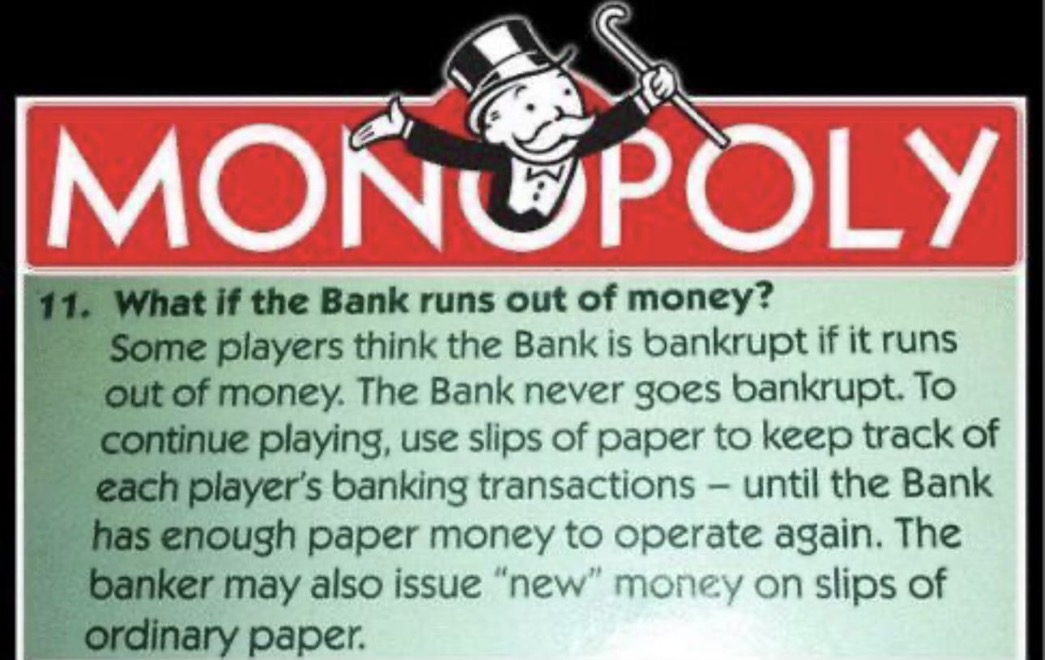
The man in the top hat says that the bank never goes bankrupt, and can always “issue new money on slips of ordinary paper”. And for the last 40 years this has been so very true. We have printed our way to feeling healthy and wealthy.
Are we sure it still holds? Can the US print even more money and not trash the dollar (the world’s reserve currency)? Would the bond vigilantes allow it?
You tell me honestly. You are all big boys and girls.
Would you today bet your own house to chase investments at 71x profits, in an industry that works on ad spend, marketing budgets, and fans having enough dosh to keep shelling out on subs, merch, and season tickets? When you have already squeezed them to the limit?
Just remember…
When all this plays out, and we do know the minute, proper judgements will be handed down. Wall Street will be bailed out again by the politicians they own.
You won’t be.
First prize is a Cadillac, second is a set of steak knives. Third prize is you’re fired.
…….
None of this is investment advice and everyone should do their own research and speak to a financial adviser. If you are looking for a name, one can do a lot worse than contacting Fred Hickey at thehightechstrategist@yahoo.com. His subscription cost is absurdly cheap. That publication also covers extensively the other area of Fred’s outlier expertise: gold, silver, and their mining companies. If you are really looking for a hedge to protect you, consider those assets. Gold was at $1000 when we started following Fred over a decade ago. Today it is at $4,600.

To order the Limited Edition of Roger Mitchell’s book “Sport’s Perfect Storm“, click here and fill the form.
Listen to our “Are you not entertained?” sport management podcast here.
To find out what we do in change management, have a look here.
For our C-suite management services, read here.
Here you can know more about our content development work.
Discover our Corporate Learning service here.
Get to know more our “Sport Summit Como” yearly sports management event here.
If you want to read our own story, go here.